Operating an ambulance in harsh desert environments presents a unique set of extreme challenges that push both emergency medical teams and their vehicles to the absolute limit. While all emergency response is difficult, desert conditions create a perfect storm of environmental and logistical obstacles that can mean the difference between life and death.
The single biggest, overarching challenge is managing the extreme thermal environment to protect patients, crew, and equipment.
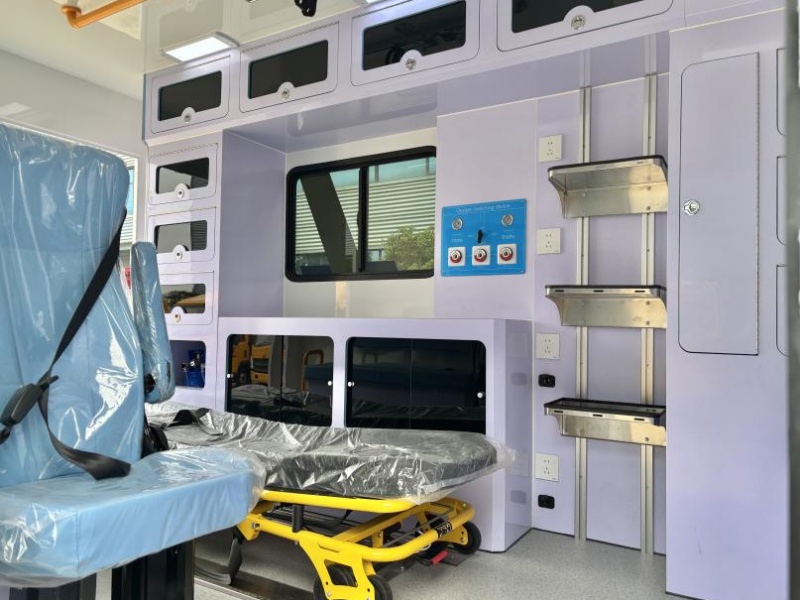
This core challenge branches out into several critical areas:
The most immediate and dangerous threat is the intense heat, which can easily exceed 120°F (49°C). This creates a direct medical crisis for patients.
Heat-Related Illness: A primary cause for call-outs becomes heat stroke and heat exhaustion. For these patients, the ambulance itself must transform into a mobile cooling unit. Rapidly lowering a patient's core temperature is the critical treatment, and the vehicle's environmental systems are a first-line medical tool.
Vulnerable Patients: Infants, the elderly, and patients with cardiac or respiratory conditions are extremely susceptible to temperature extremes. A hot cabin can push them into crisis.
The "Oven Effect": A stationary ambulance with the engine off can become dangerously hot within minutes. This makes scene management, where medics must work on a patient outside the vehicle, exceptionally risky.

The desert environment is brutally unforgiving on the ambulance's mechanical and electrical systems.
Engine Overheating: Prolonged operation in high temperatures, often at low speeds or idling for long periods on scene, pushes cooling systems to their breaking point.
Air Conditioning Failure: The ambulance air conditioning system is not a luxury; it is life-support equipment. A catastrophic AC failure in the desert directly endangers patient lives and makes the patient compartment uninhabitable for crew and patient alike. The system must work harder than in any other environment.
Electrical System Load: The constant, massive demand from the dual-zone AC, medical equipment, and refrigeration for medications places a huge strain on alternators and batteries.
Auxiliary Power Unit (APU) Necessity: To run the cabin AC and medical equipment without idling the main engine (and risking overheating), a reliable APU is essential. Its failure can strand the crew in a deadly situation.
Fine, abrasive sand and dust are pervasive and destructive.
Equipment Damage: Dust can clog vents, jam moving parts on stretchers and doors, and infiltrate sensitive medical electronics like monitors and ventilators, causing them to fail.
Air Filtration: The vehicle's HVAC filters must be exceptionally robust and changed frequently. Clogged filters reduce AC efficiency and allow harmful particulates into the patient compartment, jeopardizing patients with respiratory issues like asthma.
Engine Air Filters: Main engine air filters can become clogged much faster, leading to loss of power and potential engine damage.
Deserts are defined by vast distances and a lack of infrastructure.
Long Response and Transport Times: A patient's time in the back of the ambulance is significantly longer. This extends the period of critical care required and increases the strain on the vehicle's systems.
Limited Communication: Cellular and radio signals can be non-existent, isolating the crew from medical control and dispatch.
Difficulty of Access: Remote locations often mean navigating unmarked, soft-sand trails. This requires a specially equipped ambulance with 4x4 capability, high clearance, and recovery gear like sand tracks and winches. The risk of getting stuck is a constant threat.
The well-being of the EMTs and paramedics is fundamental to a successful mission.
Dehydration and Heat Stress: The physical exertion of patient extrication and care, combined with wearing uniforms and PPE, leads to rapid dehydration and heat stress, impairing judgment and physical ability.
Environmental Exposure: Every time the doors open, a blast of hot air enters the cabin. Crews are constantly moving between the controlled climate of the cab and the extreme heat outside.
To overcome these challenges, ambulances for desert operations require specific modifications:
Heavy-Duty Cooling Systems: Upgraded radiators, transmission coolers, and APUs.
Medical-Grade, Redundant AC: Powerful, dual-zone HVAC systems with auxiliary units and high-quality filtration.
4x4 and Off-Road Capability: Specialized tires, increased ground clearance, and robust suspension.
Extended Range: Larger fuel and water tanks.
Dust Proofing: Sealed electrical systems and enhanced cabin seals.
Crew Safety Equipment: Built-in hydration systems, reflective insulation, and comprehensive sun protection.
The biggest challenge for ambulances in harsh desert environments is the relentless heat and its cascading effects on human physiology and vehicle functionality. Success hinges on recognizing that the ambulance is more than a transport vehicle; it is a mobile, climate-controlled sanctuary. The vehicle's ability to create and maintain a stable, cool micro-environment is the most critical factor in ensuring patient safety, crew effectiveness, and ultimately, achieving a positive outcome in one of the most demanding settings for emergency medical response.



 Ambulance


